2 hr 30 min
Classical Yacht Sail to Māori Rock Carvings
Wind-powered journey across Lake Taupo's pristine waters to view towering indigenous art
Reserve
Hand-picked by our editors — only the best 5 experiences from 12 reviewed
Verified partners for every tour, free cancellation where available, and instant confirmation on every booking.
2 hr 30 min
Wind-powered journey across Lake Taupo's pristine waters to view towering indigenous art
Reserve
1 hr 30 min
Sail across New Zealand's largest lake to witness ancient indigenous cliff art on a guided boat tour
Reserve
2 hr 30 min
Glide across New Zealand's largest lake aboard a premium 53ft catamaran to ancient cliff art
ReservePrices from verified partners. Availability updates in real time at checkout. Free cancellation policies apply where shown.
The landmarks, rooms, and views travelers on this tour remember — all visible on a single visit.
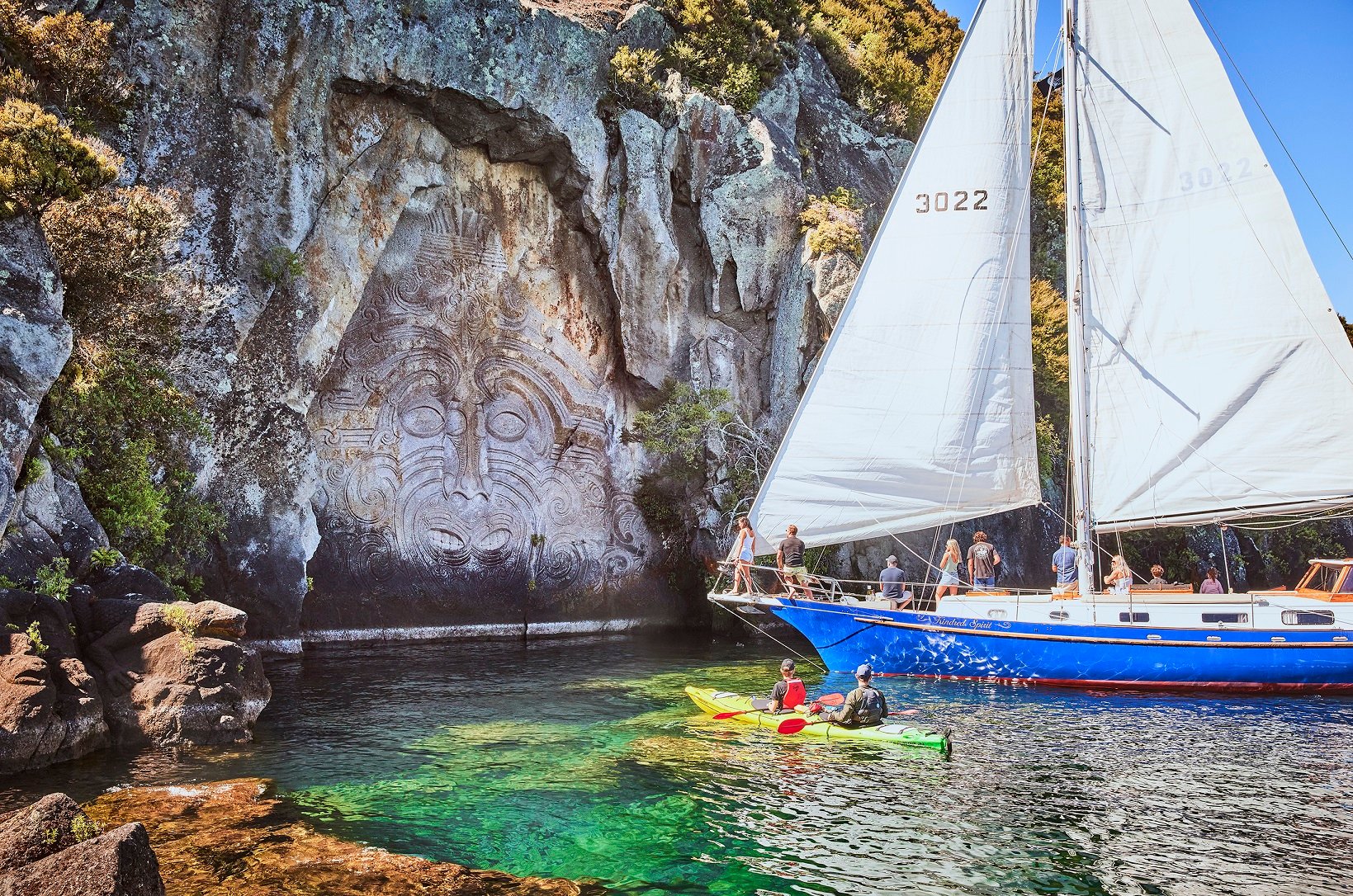
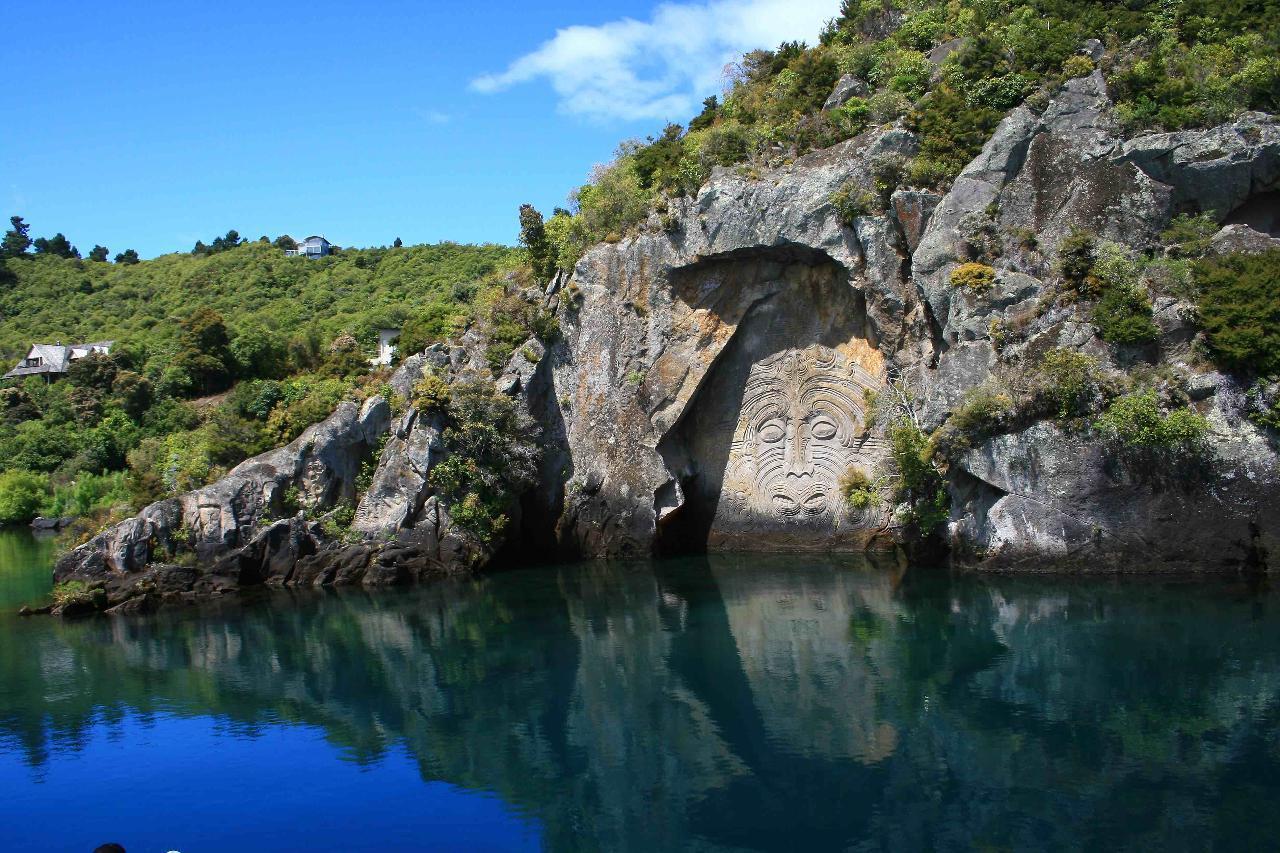
The main 14-metre-high carving depicts a legendary Māori navigator and serves as the site's most iconic landmark.
These activities complement each other; most visitors who do both call the jet boat the more thrilling option, while the maori rock carvings boat offers a reflective cultural journey. Travelers seeking Taupō landmarks often weigh these against one another to balance high-speed adrenaline with serene volcanic cliff exploration.
| Feature | Top pick Māori Rock Carvings | Huka Falls Jet |
|---|---|---|
Experience Type |
Cultural Sightseeing | High-Speed Adventure |
Primary Focus |
Māori heritage artistry | Waikato River rapids |
Physical Intensity |
Low | High |
Duration |
1.5–3 hours | 30–45 minutes |
Best For |
Photography and history | Adrenaline seekers |
| See tickets → |
Verdict: Choose the maori rock carvings boat tours for a relaxed exploration of Ngatoroirangi’s legacy, or book Huka Falls jet boat tickets for an intense ride through powerful currents.
Choose your ticket, select your date, and reserve in under two minutes. Secure checkout handled by our verified partner.
Instant confirmation by email, with a mobile voucher you can save offline. No printing, no queuing at a collection desk.
Arrive at the entrance, show your voucher on your phone, and walk in. Most tickets include priority or skip-the-line access.
Practical details for your visit straight from our verified partners — hours, access, rules, and how to get there.
Wear weather-appropriate layers, as the lake can be chilly and windy even on sunny days. Bring waterproof clothing and ensure you have comfortable, non-slip footwear suitable for a maori rock carvings boat tour.
Small day packs are generally permitted on a maori rock carvings boat tour. Keep valuables in a waterproof bag if you are planning to kayak or engage in water-based activities.
Photography is highly encouraged during your maori rock carvings boat experience. Ensure your camera or phone is secured with a wrist strap and protected from water splashes while on the boat.
While many boat cruises are accessible, individual vessel capabilities vary. Please confirm wheelchair or mobility requirements with your specific maori rock carvings boat operator before booking.
The site is family-friendly, and many operators offer tailored maori rock carvings boat tours for children. Life jackets are provided by all reputable operators and must be worn by children.
Many boat operators include complimentary light refreshments such as tea, coffee, or snacks. Bringing your own water bottle is recommended for any maori rock carvings boat excursion.
Best time to go, insider tips, nearby landmarks, and the cancellation fine print — flip through to skim what matters to you.
Flexible, no hidden fees.
Cancellation policies vary by individual boat operator. Most operators require 24–48 hours notice for a full refund of your maori rock carvings boat tickets.
The Mine Bay carvings were completed in 1980, but their creation began fourteen metres above the waterline with no scaffolding, no safety lines, and no margin for error. Master carver Matahi Whakataka-Brightwell and three assistants spent four summers chiselling the 10-metre likeness of Ngātoroirangi—the navigator who led the Te Arawa waka to Aotearoa over a thousand years earlier—directly into the rhyolite face overlooking Lake Taupō. The rock is volcanic, brittle when struck at the wrong angle, and the lake surface sits 357 metres above sea level, subject to afternoon winds that turn calm mornings into whitecapped chop within an hour. Whakataka-Brightwell worked from a dinghy, carving at eye level with the stone, then climbing the cliff to assess proportion from above. No model existed at full scale. The smaller figures flanking Ngātoroirangi—Ngātoro's companions and spiritual guardians—were added in successive seasons, their profiles cut with the same hand tools used in traditional whakairo. The carvings have no land access. Mine Bay sits on the western shore of Lake Taupō, bounded by private land and conservation reserve, and the only sightline is from the water. This isolation has preserved the site from the wear that plagues accessible rock art elsewhere in New Zealand. The rhyolite has weathered predictably—lichen grows in the deeper grooves, and seasonal rain darkens the stone—but the carved lines remain sharp, and the face of Ngātoroirangi still commands the bay with the same frontal geometry Whakataka-Brightwell intended. The lake itself is a caldera, formed 26,500 years ago in one of the largest eruptions the planet has recorded, and its shores are still thermally active; hot springs surface near the carvings, and steam vents mark the cliffs to the north. Today, maori rock carvings boat access is managed through a combination of commercial operators and private kayak hire, with no permit required for viewing but strict protocols around approaching the cliff face. Most vessels hold station fifteen to twenty metres offshore; closer approach risks propeller damage from submerged boulders and disturbs the acoustic clarity that lets guides explain the iconography without amplification. The carvings are not a tapu site in the prohibitive sense, but they are taonga—treasured objects—and the operational consensus is that distance preserves both the stone and the mana of the work. Calm water mornings between October and March offer the clearest detail; by midday the sun moves behind the cliff, and the carvings fall into shadow. The lake sits within the rohe of Ngāti Tūwharetoa, and while the carvings are a twentieth-century addition, they anchor a continuous narrative of presence that predates European arrival by six centuries.
"The carvings have no land access—the only sightline is from the water, and isolation has preserved what accessibility destroys elsewhere."
A step-by-step walkthrough of the visit — what you'll see, how long each stage takes, and the details that matter.
You leave from the southern shore of Lake Taupō, most often from Taupō town or Kinloch, and the first fifteen minutes cross open water with the volcanic peaks of Tongariro visible to the south on clear days. The lake surface reads the weather early; if the morning is still, the crossing is glassy, and if wind is building, you feel the chop before you see it. Mine Bay appears as a curved indent in the western shoreline, recognizable by the cluster of vessels that gather there between nine and noon. As your boat slows and turns parallel to the cliff, the carvings resolve from texture into geometry—first the broad planes of Ngātoroirangi's face, then the smaller figures at shoulder height, then the descending patterns that extend toward the waterline. The scale is difficult to judge from fifteen metres out until your guide points to a kayaker drifting near the base; the central face is twice the height of a standing person, and the full composition spans nearly fourteen metres of vertical stone. You have ten to fifteen minutes at station, enough to photograph the carvings in shifting light and listen to the narrative of Ngātoroirangi's journey—the storm on the summit of Tongariro, the prayer to his sisters in Hawaiki, the fire that saved him. The water beneath you is over thirty metres deep, and if you look down, the volcanic sand of the lakebed fades into darkness before it becomes visible.
Entry to the carvings themselves is 0 NZD, but you must arrange your own transport via boat or kayak to reach the site. Tours typically involve a service fee paid to the operator.
Yes, various operators offer daily trips to the Mine Bay Māori Rock Carvings.
The best arrival window is 08:30–17:00, when morning and early afternoon light provide excellent visibility and calmer lake conditions.
Yes, you can paddle your own kayak to the Mine Bay Māori Rock Carvings, provided you have the necessary experience and equipment for open water.
No, but children must be supervised on any maori rock carvings boat tour and life jackets are mandatory for all ages.
It is highly recommended to book your maori rock carvings boat tickets in advance, especially during the busy summer season.
Most boat tours will proceed in light rain but may be cancelled by the operator in extreme weather conditions for safety reasons.
Swimming is often permitted at designated stops or near the site depending on the specific tour operator and lake conditions.
Most tours range from 90 minutes to 4 hours depending on the operator and whether the trip includes additional lake activities.