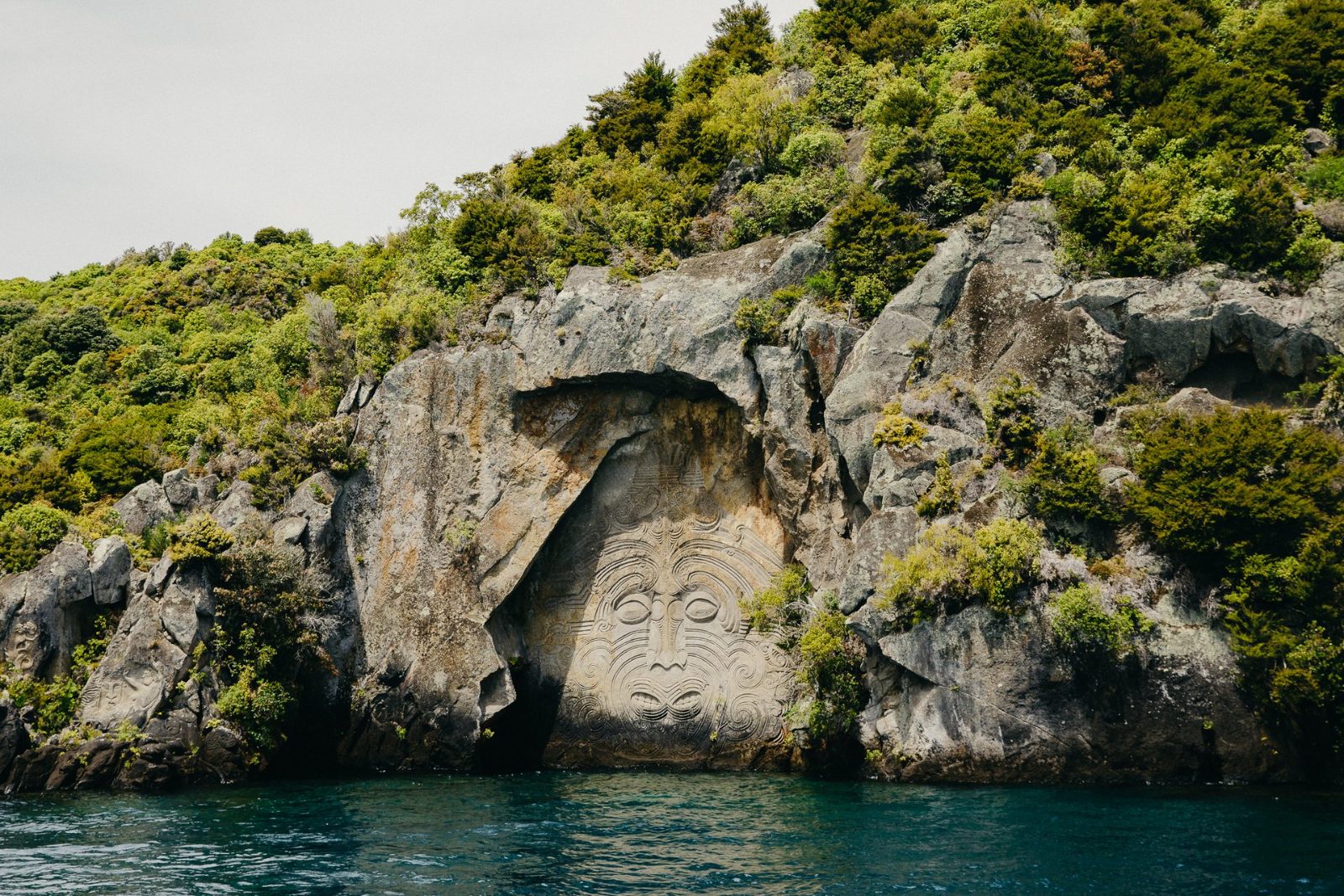
Ngātoroirangi Carving
The central figure represents the high priest Ngātoroirangi, who is credited with guiding the Te Arawa and Ngāti Tūwharetoa ancestors to the region.
View from the bow to capture the scale of the carving.
The Ngātoroirangi carvings at Mine Bay are accessible only by boat, carved into volcanic rock 14 meters above the waterline. This guide covers departure logistics, the story behind the 10-meter tohunga figure, and what happens during the approach.
Quick answer
Tours to the ngātoroirangi mine bay māori rock carvings boat tour depart year-round from Taupō Marina and Acacia Bay, with most operators running morning and afternoon sailings between 8:30 and 16:00. The carvings themselves are free to view but accessible only by boat; tour fees vary by operator and typically range from 45 to 85 NZD per adult. Morning departures between 08:30 and 10:30 offer the calmest water and the best light for photography.
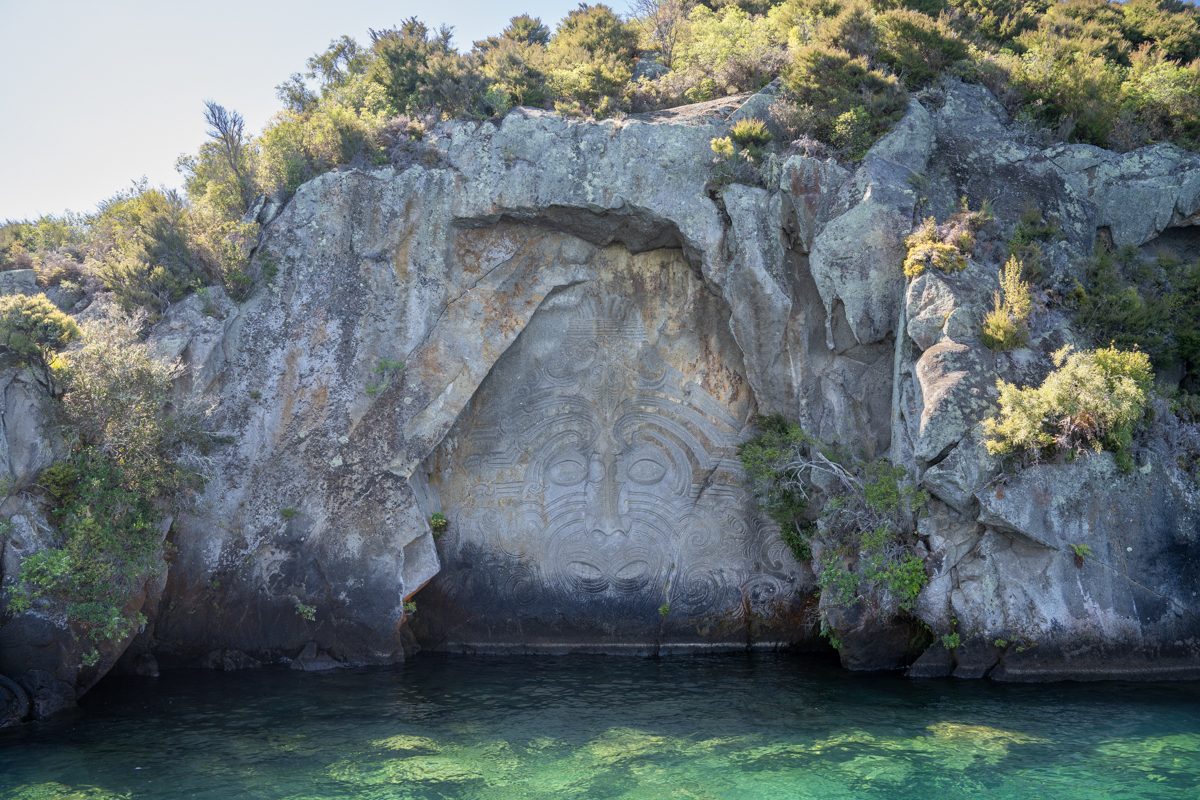
The 10-meter figure of Ngātoroirangi dominates the cliff face at Mine Bay, flanked by smaller depictions of Māori mythology carved directly into the volcanic rock between 1976 and 1980. Master carver Matahi Whakataka-Brightwell led the project, suspended from ropes above the lake for four summers to complete the work commissioned by local iwi. The scale becomes clear only as the boat slows within 20 meters of the wall — the tohunga's face alone measures over two meters from brow to chin. A ngātoroirangi mine bay māori rock carvings boat tour typically departs from Taupō township or Acacia Bay and follows the western shoreline for 20 to 35 minutes depending on the operator's route and vessel speed. Most cruises pause directly in front of the carvings for 10 to 15 minutes while the guide explains the iconography and the significance of Ngātoroirangi, the navigator who led the Te Arawa waka to New Zealand and called forth the volcanic fires of Tongariro. The formations beside the main figure represent taniwha, ancestral guardians, and the Southern Cross constellation that guided Pacific voyagers. The carvings sit on Māori land within the Lake Taupō reserve, and while viewing from the water is unrestricted year-round, no landing or direct access is permitted. Tour operators hold permissions to approach the wall, and independent kayakers and boaters may view the site from a respectful distance without formal permission. Water conditions determine visibility — calm mornings produce the clearest reflections and allow the boat to idle closer to the rock face, while afternoon winds can push vessels farther out and create chop that obscures the lower carvings. Operators vary in vessel type, from small launches carrying 12 passengers to larger cats that seat 60, and some combine the Mine Bay route with stops at hot springs or geothermal bays farther north. The journey itself crosses deep water — Lake Taupō reaches 186 meters at its deepest point — and the contrast between the submerged caldera and the exposed art anchored above it reinforces the scale of the Taupō volcanic zone. Pack layers; even in summer the wind across open water drops the perceived temperature, and the return leg typically runs faster with less shelter from the breeze.
“The tohunga's face alone measures over two meters from brow to chin, a scale that becomes clear only as the boat slows within 20 meters of the wall.”
The optimal window to experience the Ngātoroirangi Mine Bay Māori Rock Carvings is between 08:30 and 10:30. During these morning hours, visitors encounter calmer lake conditions and superior light for photography.
Warm, average 23°C
Longer days provide flexibility for afternoon departures.
Cooler, average 16°C
Stable conditions and clear skies are common during these months.
Cold, average 11°C
Crisp, calm air is frequent, though mornings may be frosty.
—
This period offers the most serene experience on the water.
Verdict: The best arrival window is 08:30–10:30, ideally during the shoulder seasons of autumn or spring to balance crowd levels and water stability.
The Ngātoroirangi Mine Bay Māori Rock Carvings are located in a public area accessible only by water, meaning there is no entry fee to view the site itself. However, because the carvings are located at Mine Bay, visitors must arrange transport via commercial boat operators who charge fees for their services.
Verdict: While there is no entrance fee for the site, visitors typically pay commercial rates for boat tours, which fluctuate based on the specific operator and cruise package selected.
The Ngātoroirangi Mine Bay Māori Rock Carvings are accessible by boat at any time throughout the week. Tour operators provide transport to the site daily.
The ngātoroirangi mine bay māori rock carvings boat tour site preserves a monument carved between 1976 and 1980 by Matahi Whakataka-Brightwell, a master carver from Tūrangi, and his three assistants. Working from scaffolding suspended over the lake, the team spent four summers chiseling the 10-meter-high face of Ngātoroirangi into the volcanic cliff. Ngātoroirangi was the navigator and tohunga who guided the Te Arawa waka from Hawaiki to Aotearoa in the 14th century, later summoning fire from the volcanic plateau to save his people from freezing on Mount Tongariro. The carvings depict his face and torso in profile, flanked by smaller figures representing Hinemoa and Tūtānekai, whose love story is woven into Rotorua tradition. Commissioned by the Māori Land Court and funded through a government grant, the project aimed to honor Ngātoroirangi's spiritual authority over the Taupō region and affirm Ngāti Tūwharetoa ownership of the lakebed. Whakataka-Brightwell drew on traditional whakairo patterns but adapted his technique to the scale and exposure of the cliff face, carving directly into the rhyolite without preliminary sketches. The inaccessibility of Mine Bay by land ensured the work remained undisturbed during creation, visible only to passing boats. Today visitors approach the rock carvings by water, retracing the ancestral arrival routes of the Te Arawa iwi. The volcanic stone has weathered minimally since completion, and the carvings retain the sharp edges and deep relief Whakataka-Brightwell intended. Morning light reveals the full depth of the carving, with shadows defining Ngātoroirangi's brow and the curve of his shoulders. The site remains under Ngāti Tūwharetoa guardianship, and the carvings continue to function as a sacred marker of tribal connection to Lake Taupō and the geothermal forces that shaped the landscape.
Ngātoroirangi navigates the Te Arawa waka from Hawaiki to Aotearoa and later summons fire from Mount Tongariro to save his people.
Matahi Whakataka-Brightwell and three assistants begin carving the 10-meter-high likeness of Ngātoroirangi into the Mine Bay cliff face.
The team works from suspended scaffolding over four summers, chiseling directly into volcanic rhyolite without preliminary sketches.
The carvings are completed, depicting Ngātoroirangi flanked by figures of Hinemoa and Tūtānekai, affirming Ngāti Tūwharetoa ownership of the lakebed.
The rock carvings remain under Ngāti Tūwharetoa guardianship, accessible only by boat and weathering minimally in the volcanic stone.
The Mine Bay site features a collection of contemporary Māori rock carvings that extend over 10 meters above the water surface of Lake Taupō. These works serve as a modern cultural landmark representing the artistic heritage of the local iwi.
The central figure represents the high priest Ngātoroirangi, who is credited with guiding the Te Arawa and Ngāti Tūwharetoa ancestors to the region.
View from the bow to capture the scale of the carving.
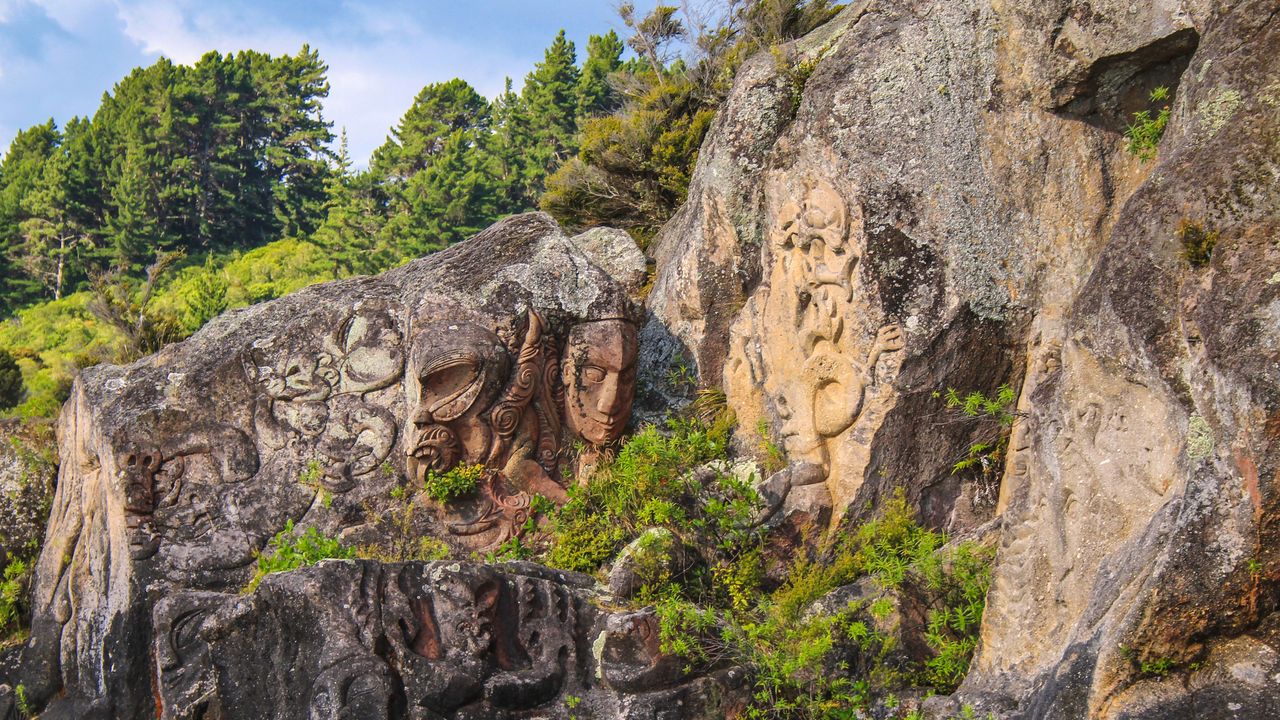
Surrounding the central figure are smaller carvings depicting birds, fish, and historical motifs that complement the primary subject.
Ask your boat captain to navigate closer for fine detail.
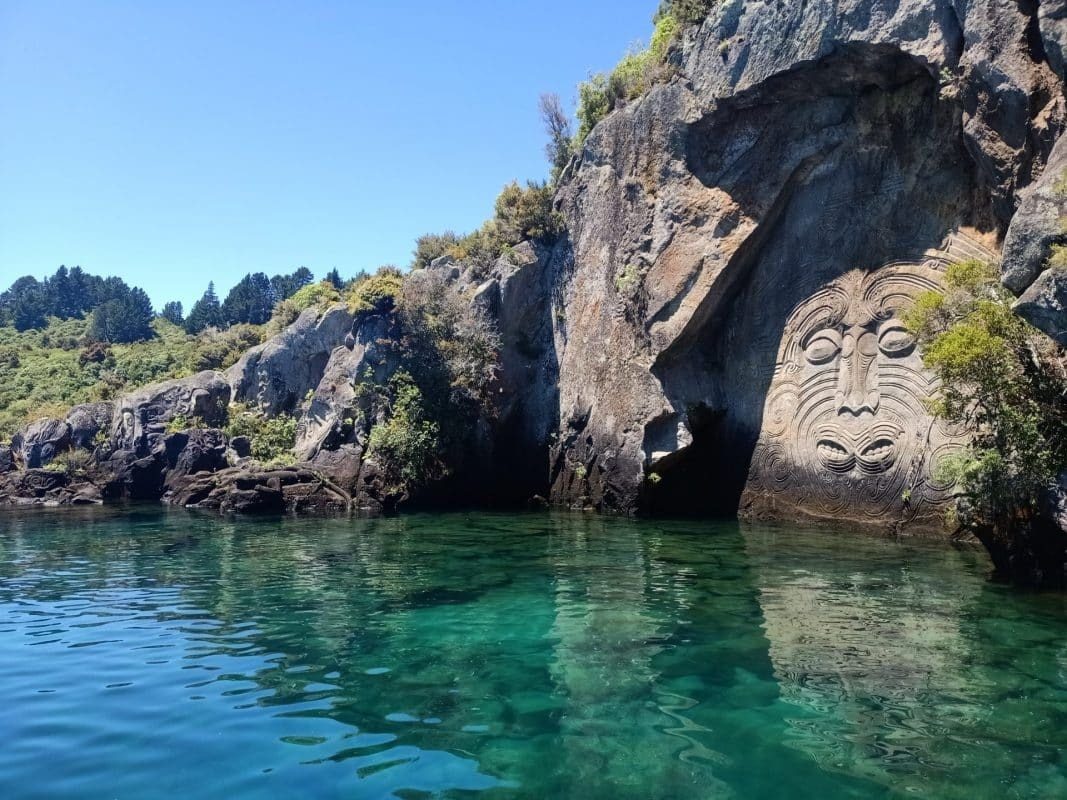
These works incorporate stylized representations of ancestral spirits and cultural symbols relevant to the Ngāti Tūwharetoa people.
Use a polarizing filter to reduce lake surface glare.
Intricate geometric patterns carved into the rock face signify levels of learning and spiritual growth within Māori tradition.
Look for the pattern transitions near the base of the rock.
The carvings at Mine Bay are a living taonga (treasure) and sacred site. Respectful behavior on the water honors Ngāti Tūwharetoa traditions and preserves the site for future generations.
Everything you need to know about ngātoroirangi mine bay māori rock carvings boat tour
The site is located at Mine Bay on Lake Taupō and is only accessible by water. You must book a vessel or watercraft to view the cliff-side art firsthand.
While the carvings themselves have an entrance fee of 0 NZD, you will need to pay for a commercial vessel or boat rental to reach them. The tours offered by various local operators are the primary method of transport.
The best arrival window is 08:30–10:30, as morning cruises provide calmer water and superior light for photography. Planning your trip during this window ensures a comfortable experience.
No, there is no road access to the cliff face. You must utilize a boat or kayak tour to see the landmark, as it is situated directly on the lake shore.
Yes, children are welcome on most commercial excursions to the site. Please check with your specific vessel operator regarding age requirements and safety gear.
The carvings commemorate the ancestor Ngātoroirangi and are a significant cultural landmark in New Zealand. These massive sculptures were created in the late 1970s and remain an iconic feature of Lake Taupō.